Imagine you are standing in front of two very different tools. One is a precise syringe that delivers exactly 5 milliliters of fluid every time you push the plunger. The other is a household fan that moves air by spinning its blades at high speed. When it comes to oil pumps, you face a similar fundamental choice: a gear pump functions like that syringe, while a centrifugal pump works like that fan. Both will get the job done, but the nature of the job determines which one belongs in your system.
Do you need the steady, unwavering pressure of a positive displacement oil pump, or the high-volume throughput of a dynamic oil pump? The answer lies not in any marketing brochure, but in the physics of how each pump interacts with your specific oil. Let's set aside the checklists for a moment and first understand what is actually happening inside these machines. Once you grasp that, the selection almost makes itself.
How Gear Oil Pumps and Centrifugal Oil Pumps Work
The Gear Oil Pump: Positive Displacement at Work
A gear pump belongs to the positive displacement family of oil pumps. It moves fluid by mechanically trapping a fixed volume of oil and physically pushing it from the suction side to the discharge side.
Here's what actually happens inside: The pump contains two intermeshing gears housed within a tightly fitted casing. As these gears rotate in opposite directions, the cavity between the gear teeth and the housing wall expands on the inlet side, creating a partial vacuum that draws oil in. The oil becomes trapped in the pockets between the teeth and is carried around the circumference of the housing toward the discharge port. When the gear teeth mesh again on the outlet side, that trapped oil is squeezed out into the discharge line.
The key point here is that every single revolution of the gears delivers the same volume of oil, regardless of what pressure the pump is working against. This is what "positive displacement" actually means in practice. It is not marketing language. It is a mechanical reality.
.jpg "/uploads/image/2026/05/21/boat-gear-oil-pump (1).jpg")
The Centrifugal Oil Pump: Kinetic Energy Conversion
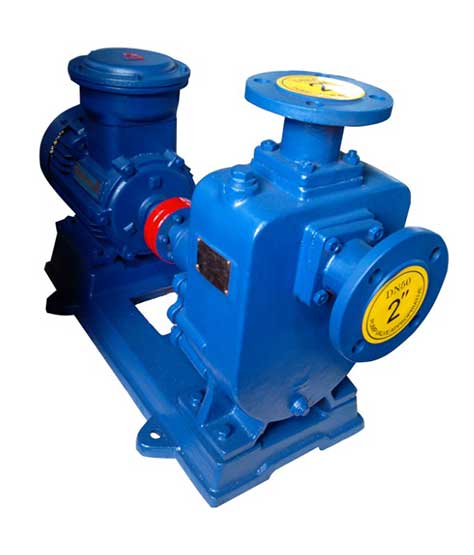
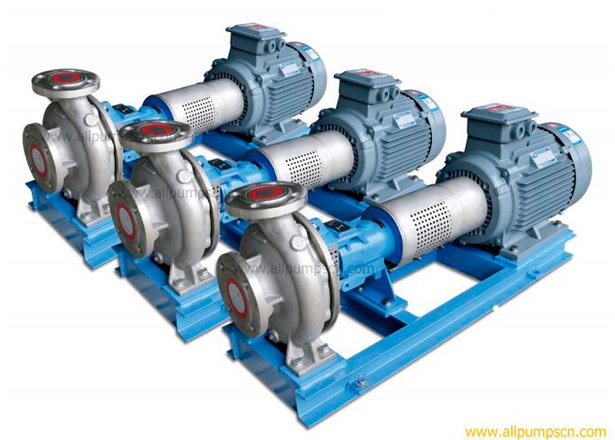
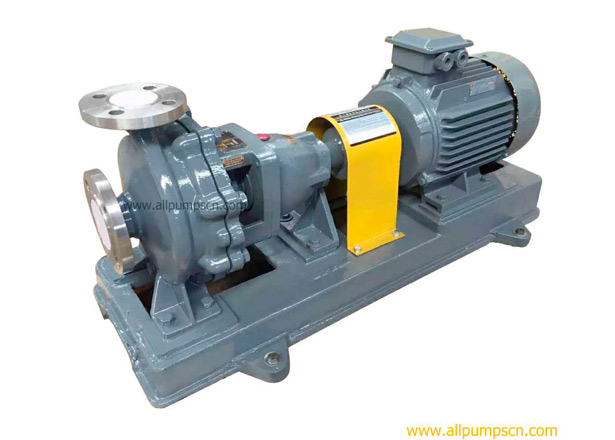
Centrifugal pumps are entirely different machines in the dynamic category of oil pumps. They use a rotating impeller to accelerate the oil, converting velocity into pressure through centrifugal force.
The impeller spins at high speed inside the pump casing. Oil enters through the center of the impeller, and the rotational motion flings it outward to the periphery. As the oil leaves the impeller at high velocity, the volute casing gradually widens, converting that kinetic energy into pressure. There are no trapped volumes here, no mechanical squeezing of fluid through a defined cavity.
This is a fundamentally different way of moving liquid, and it comes with consequences for performance, efficiency, and the types of oil these pumps can handle well.
The Viscosity Factor: Where Most Oil Pump Decisions Are Actually Made
If you remember only one takeaway from this article, let it be this: viscosity determines the oil pump type, not the other way around. This is where gear oil pumps and centrifugal oil pumps diverge most dramatically in their real-world performance.
When centrifugal oil pumps encounter viscous oil, their performance degrades quickly. The friction of thick fluid against the spinning impeller consumes energy that would otherwise be converted into pressure. Industry guidance consistently notes that centrifugal pumps become a questionable choice for liquids with viscosities above roughly 100 centipoise (cP), and performance declines significantly beyond 200 centistokes (cSt). For perspective, light lubricating oils often fall in the 20 to 100 cSt range, while heavier gear oils can climb to several hundred cSt or more. A centrifugal oil pump may manage light oil transfer, but it will struggle badly with thicker fluids.
Gear oil pumps handle viscosity in a completely different way. The interlocking gears create a positive seal that minimizes internal slippage, meaning the pump does not care as much about how thick the fluid is. Gear pumps can reliably move fluids across a vast viscosity range, from as low as 5 cP to as high as 1,000,000 cP, without the dramatic efficiency losses seen in centrifugal designs. This flexibility is one of the main reasons gear oil pumps dominate in lubrication systems, fuel transfer applications, and anywhere high-viscosity oils are involved.
Flow and Pressure Behavior in Oil Pumps: Constant vs. Variable
The viscosity issue leads naturally to another critical distinction: how each type of oil pump responds to changes in system pressure. This is where the "syringe vs. fan" analogy becomes particularly useful. Before exploring specific designs, it helps to recognize the main industrial pumps types you will encounter in oil handling—positive displacement and dynamic pumps.
Gear oil pumps deliver a nearly constant flow rate regardless of discharge pressure. As system pressure increases, the pump keeps pushing out roughly the same volume per revolution. There is some internal leakage through the clearances between gears and the housing, but this is minimal in well-maintained oil pumps. This predictable behavior makes gear pumps the go-to choice for metering, dosing, and any application where flow consistency matters more than sheer volume.
Centrifugal oil pumps behave very differently. Their flow rate drops as the system pressure increases, meaning they operate well only near a specific "best efficiency point" on their performance curve. Push a centrifugal oil pump too far from this sweet spot, and both flow and efficiency suffer significantly. This is not a design flaw; it is simply how dynamic pumps work. For applications with relatively stable operating conditions and high flow demands at moderate pressures, this behavior is perfectly acceptable and even desirable, given the pump's simple design.
The table below summarizes the comparison between these two oil pump types at a glance:
Where Each Type of Oil Pump Truly Shines in Applications
Understanding the principles is helpful, but most engineers want to know: what applications actually demand which oil pump type? Here is where theory meets practice.
Gear Oil Pumps: Precision, Pressure, and Thick Fluids
Gear pumps are the workhorses of industrial lubrication. You will find these oil pumps in engine oil circulation systems, hydraulic power units, and fuel transfer setups where the fluid is too viscous for a centrifugal pump to handle efficiently. They also excel in chemical transfer applications involving high-viscosity fluids. Their self-priming nature is a practical advantage too. Unlike a standard centrifugal oil pump that must be primed before starting, a gear oil pump can generally evacuate air from the suction line on its own. This matters when your pump sits above the fluid source or when you cannot afford the downtime of manual priming.
The simple and compact structure of typical gear oil pumps makes operation and maintenance straightforward, with good self-priming performance built in as a standard feature. For applications requiring flexible drive configurations, belt-driven gear pumps can be driven by an external motor through a belt and pulley system, providing additional versatility in installation and speed adjustment.
Centrifugal Oil Pumps: Volume, Speed, and Light Fluids
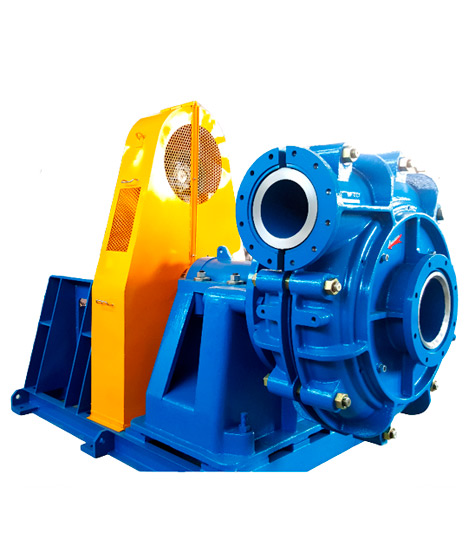
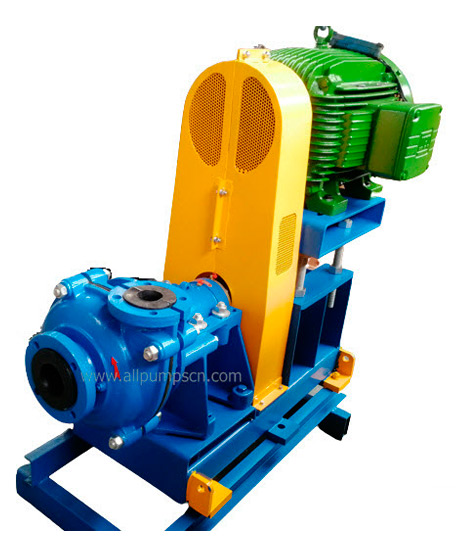
Centrifugal oil pumps come into their own when you need to move large volumes of relatively thin oil quickly. They are extensively used in the oil and gas industry as the most common pump type for transferring light crude, diesel, and other low-viscosity petroleum products from one location to another. Their simple construction means fewer wearing parts, lower initial cost, and easier maintenance compared to most positive displacement oil pumps.
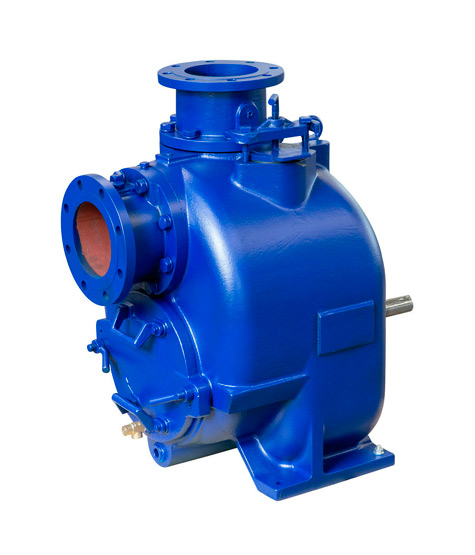
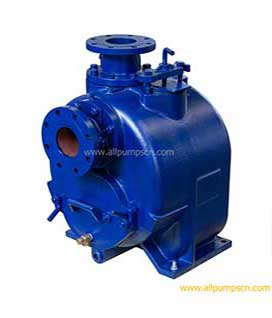
Centrifugal oil pumps also handle impurities better than gear pumps. If the oil stream contains some abrasive particles, a centrifugal pump is generally more forgiving, since there are no tightly meshed gears that can be damaged by grit. For applications where the pump needs to operate in a suction-lift condition, self-priming centrifugal oil pumps are designed to automatically evacuate air from the suction line, eliminating the need for manual priming and ensuring a smooth, uninterrupted transfer process. These pumps are widely used as discharge pumps for oil tankers, depots, and various transfer duties in the petroleum sector.
A Sensible Path to Selecting the Right Oil Pump
If you find yourself weighing these two oil pump types, here is a practical framework that cuts through the complexity.
Start with your fluid. What oil are you pumping? Grab a viscosity value in centistokes or centipoise if you can. If it is a light oil below 100 cSt and you need high volumes, a centrifugal oil pump is your natural starting point. If the oil is heavier or the viscosity fluctuates with temperature, lean toward a gear oil pump.
Then consider your system pressure. Does the system pressure vary? If yes, and you need steady flow regardless, a gear oil pump is the safer bet. If the system runs at relatively stable pressure and head conditions, a centrifugal oil pump will serve you well.
Finally, think about maintenance access and space. Do you have room for a larger pump package? Can your team handle gear replacement when it eventually becomes necessary? The answers to these practical questions often tip the balance between two otherwise viable oil pump options.
Conclusion
In the end, the choice between a gear oil pump and a centrifugal oil pump comes down to the specific fluid you are moving and the operating conditions your system demands. Gear oil pumps deliver steady, reliable flow against high pressure and viscous fluids, while centrifugal oil pumps move large volumes of light oil efficiently and tolerate impurities better. Neither design is universally superior — each simply solves a different set of engineering challenges. Understanding how viscosity, pressure behavior, and maintenance realities shape pump performance allows you to move past generic recommendations and select the right oil pump for the job. That clarity, more than any specification sheet, is what keeps your oil transfer operations running smoothly over the long term.
FAQs About Oil Pumps
Q1: What is an oil pump?
A: An oil pump is a device designed to move oil from one place to another, commonly for lubrication, fuel transfer, or hydraulic systems.
Q2: Can oil pumps handle different viscosities?
A: Yes, different designs are suited for low- to high-viscosity oils. Always check manufacturer specifications.
Q3: What is the advantage of a self-priming oil pump?
A: It eliminates manual priming, making it easier to lift oil from tanks or reservoirs. For example, a self priming oil transfer pump can draw from a below-ground storage tank without external priming.
Q4: How do I maintain an oil pump for longevity?
A: Regular inspection, lubrication, filter maintenance, and seal checks ensure reliable long-term operation.
Q5: Are gear oil pumps self-priming, and why does this matter?
Yes. Most gear oil pumps are inherently self-priming because the meshing gears create sufficient suction to evacuate air from the inlet line. This means the pump can be positioned above the fluid source without requiring manual priming before startup. It is a significant practical advantage in installations where gravity-fed suction is not possible.
 EN
EN
 fr
fr  de
de  es
es  ru
ru  pt
pt  ar
ar  vi
vi  hi
hi  id
id  af
af